
Earlier this year I built the Tamiya Bf109 G-6 which was released about the same time as this Spitfire (Ref 61119) so I was eager to review what’s in the, and naturally compare the two models. This is 2018 tooling (like the 109) so I am expecting similar standards, and they were produced with the idea that the modeller will be able to build a detailed model straight from the box with no need to purchase any aftermarket parts (thus offsetting the high price).
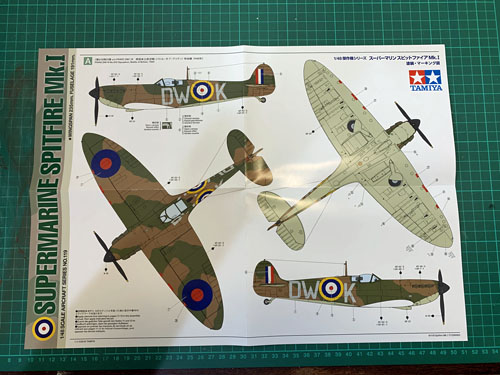
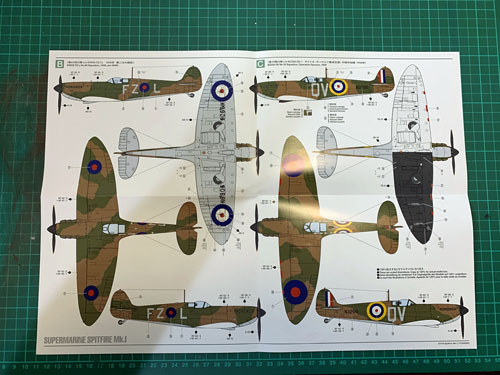
Looking at the box it shows there are three variants of the Spitfire Mk.1, though these differences are quite minor structurally so the main different will be the paint scheme. All have the green and brown topside, but different undersides (plain grey, duck-egg blue or the black and white halves of Operation Dynamo). The box also shows that includes is a small fret of photo-etch which provides harnesses and cockpit detail (something sadly – and surprisingly – lacking in the 109).


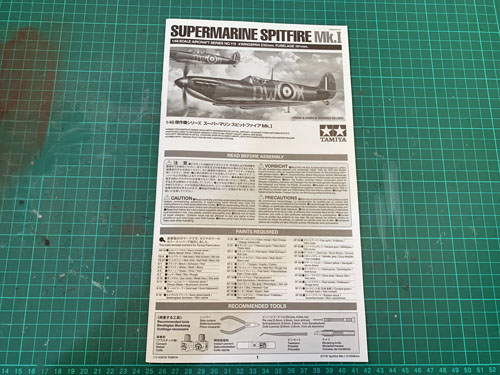
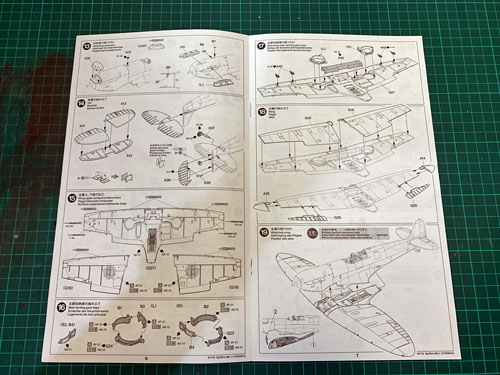
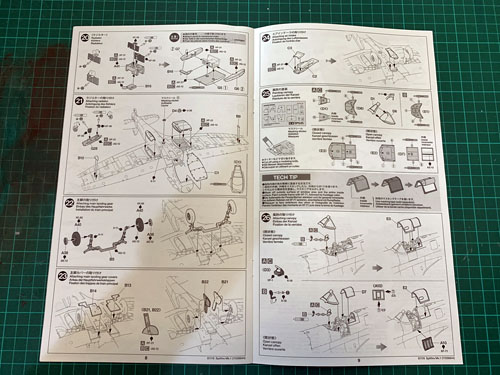
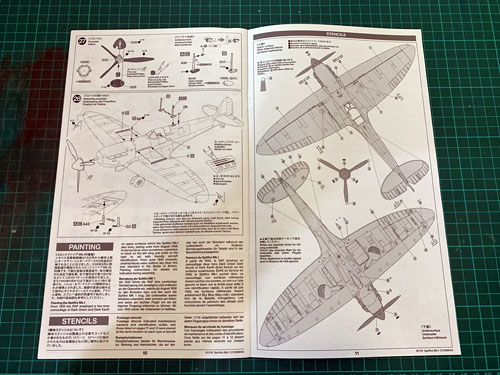
The instructions are clear and concise, showing the few options available. The first 12 parts are taken up with building the cockpit and detailing the interior, so it appears that this is where Tamiya are focussing their efforts. The construction process looks relatively simply, and pretty much standard for a Spitfire model build from any manufacturer.



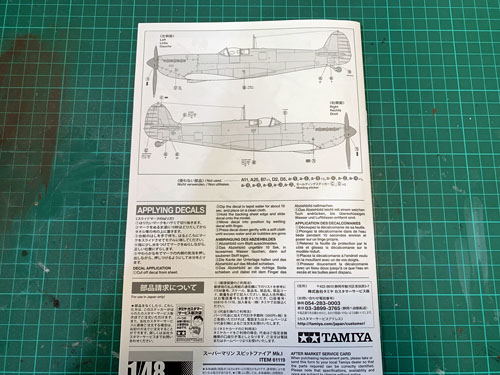
The decals do look a little thick, but this is standard for Tamiya; and no doubt they bed down and conform will applications of MicroSet and MicroSol. There is a mask set supplies, but this is uncut. It will be useful for the modeller, but with the curves I’m yet to decide whether it will be necessary – or will it be easier to mask with some thin tape over the curved surface. Also included is a small sheet of transfers for adding canopy detail.


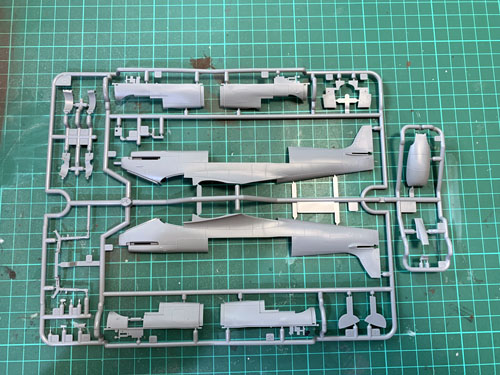
It is immediately obvious that there are a lot less parts to the Spitfire compared to the 109 – with just three main plastic sprues. There are also no options for flaps and rudders to be positioned either, so careful cutting with the razor saw will be required if you want to pose your Spitfire more naturally. The quality of the moulds is high, and there is a lot of very fine detail. Care will be needed by the modeller to ensure that primer and paint layers aren’t too thick to ensure that this detail will be revealed with panel washes and weathering. I think it won’t be until this stage that the quality of this kit will really shine.
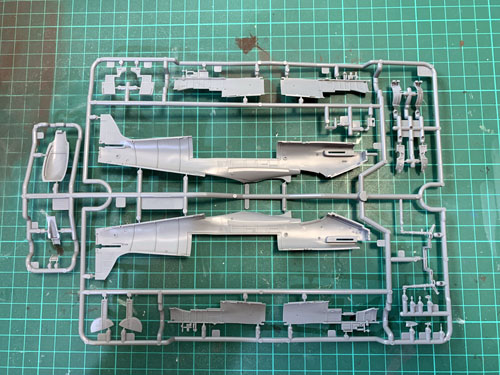
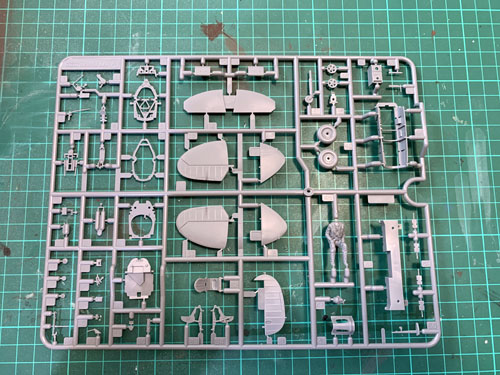
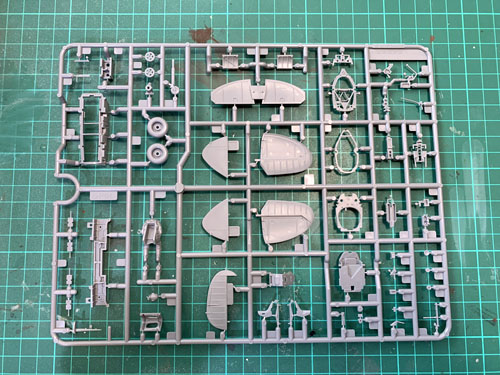
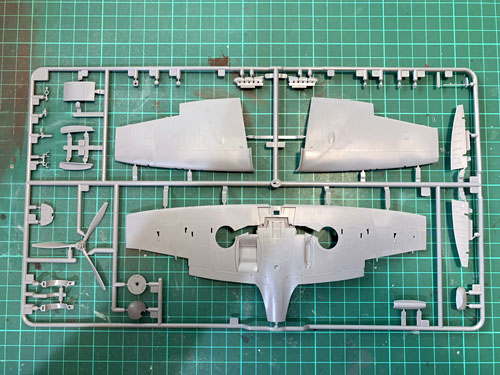
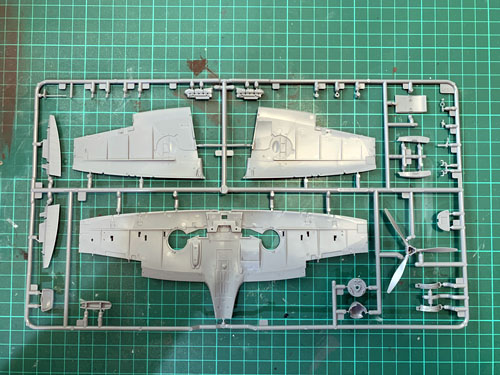
As well as possibility the 109 also had the ability to display the engine (where the cowlings are held in place by small magnets, allowing the modeller to switch – even after completing the model). It would have been nice to have this option to display the legendary Merlin powerplant, but alas this is not something Tamiya have given us the option to do.
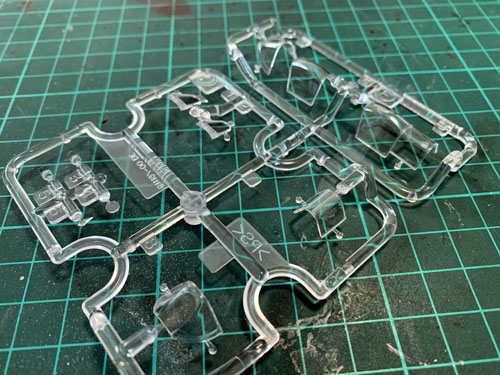
The clear parts are very clear and even look polished. Despite the complex compound curves of the bubble canopy there was minimal distortion. Even if you are modelling your Spitfire with the canopy closed it will still allow good views into the cockpit.


As mentioned, it really does seem that though Tamiya have done a good job giving the outside surfaces fine detail, it’s really the interior (with the addition of the photoetch) where Tamiya have excelled here. Whether this will be worth the additional expense when compared to other 1/48 scale Spitfire will be seen once the model gets built.